What If Reality Is Embarrassingly Simple?
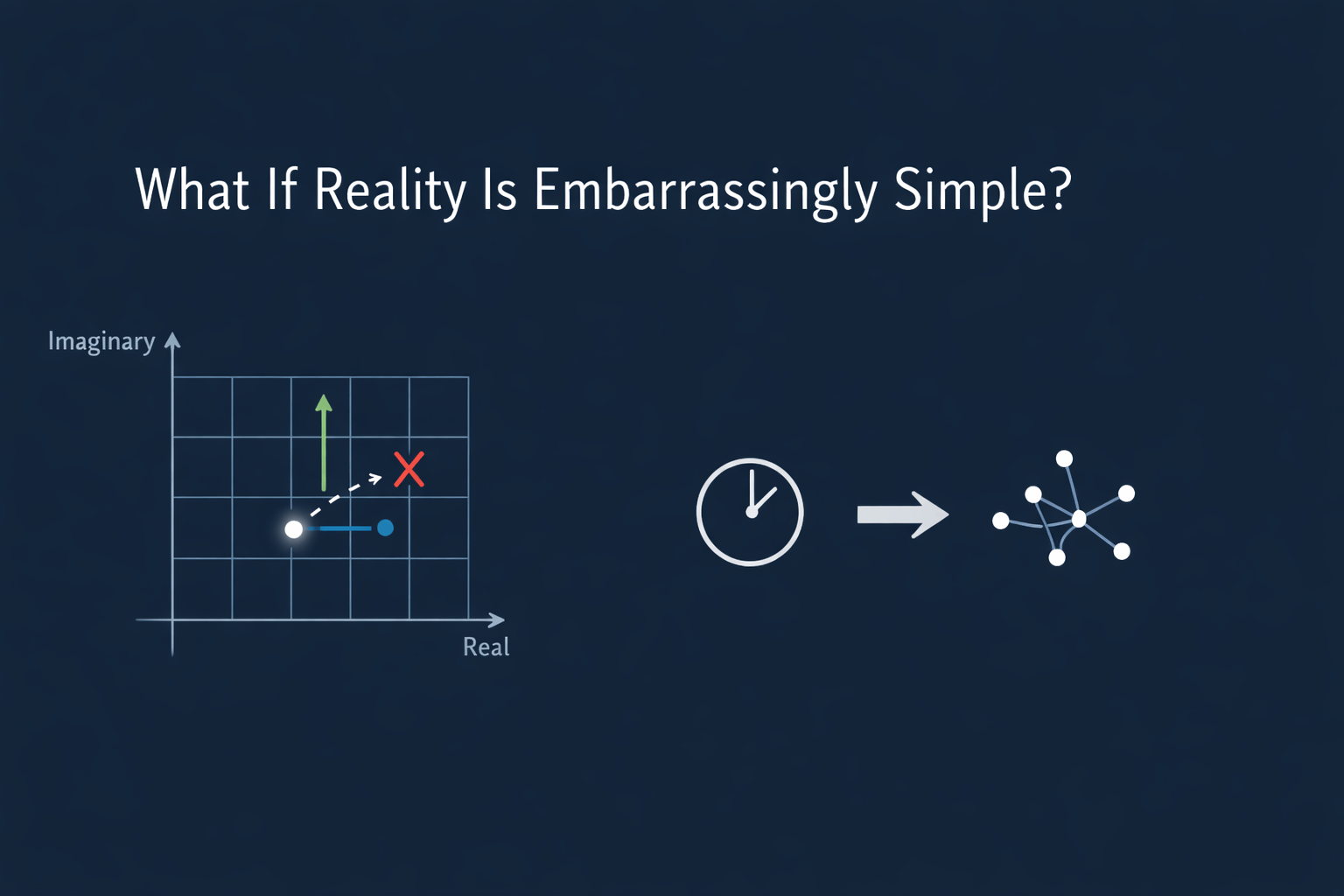
What if everything we call “reality” — everything we know, and everything that exists — is just emergent from a handful of absurdly simple update rules running on a one-dimensional complex space?
Not “simple” like a neat equation on a slide. I mean . Like:
There is a dot (a state) sitting in a box on a complex plane (think polar grid, whatever).
Every epoch (tick), it must update.
It cannot stay where it is.
It cannot move into a box that’s already occupied by another dot.
That’s it.
And then… boom. Worlds. Forces. Time. Entropy. “Particles.” “Fields.” The whole circus.
It’s so simple it almost feels embarrassing to even say out loud. Like you’re going to get laughed at for wasting people’s time. And honestly, that reaction itself is part of the story.
The weird pattern we keep ignoring
If you look at the history of science (and the philosophy of science), there’s a pattern that keeps showing up:
We keep going from complex explanations to simpler constituents.
People used to say: “Everything is made of four elements.”
Earth, water, air, fire. A nice story.
Then we got more serious:
Matter is made of molecules.
Molecules are made of atoms.
Atoms are made of electrons and nuclei.
Nuclei are made of protons and neutrons.
And at each step, the message was basically the same:
“All this complexity you see is not fundamental. It’s emergent.”
Even most of what feels “real” in daily life — chemistry, biology, weather, life, consciousness — is sitting on top of a tiny set of underlying pieces and a few interactions.
If you zoom out, the world around you is basically:
a couple of particle types,
a couple of interactions,
and a lot of emergence.
Then something happened… and we reversed the direction
At some point, the “simplify” direction got weirdly inverted.
Instead of finding the key, we started building bigger and bigger locks.
We added quarks, more quarks, flavors, colors, gluons.
We added strong and weak forces (which are real, but mostly hidden from daily life).
We wrote Lagrangians that look like whole books.
Then tensors. Spinors. Holonomy. Gauge bundles.
Then higher dimensions, 10D, 11D… and matrix objects that become “the fundamental thing.”
And I’m not saying any of this is stupid. A lot of it is insanely beautiful and works amazingly well.
But the vibe changed.
It became:
“If nature is hard, the equations must be hard.”
“If the truth is deep, the formalism must look deep.”
And sometimes that’s true.
But sometimes… that’s just us coping with the fact we still don’t have the key.
The elephant in the dark problem
Here’s the metaphor I can’t unsee:
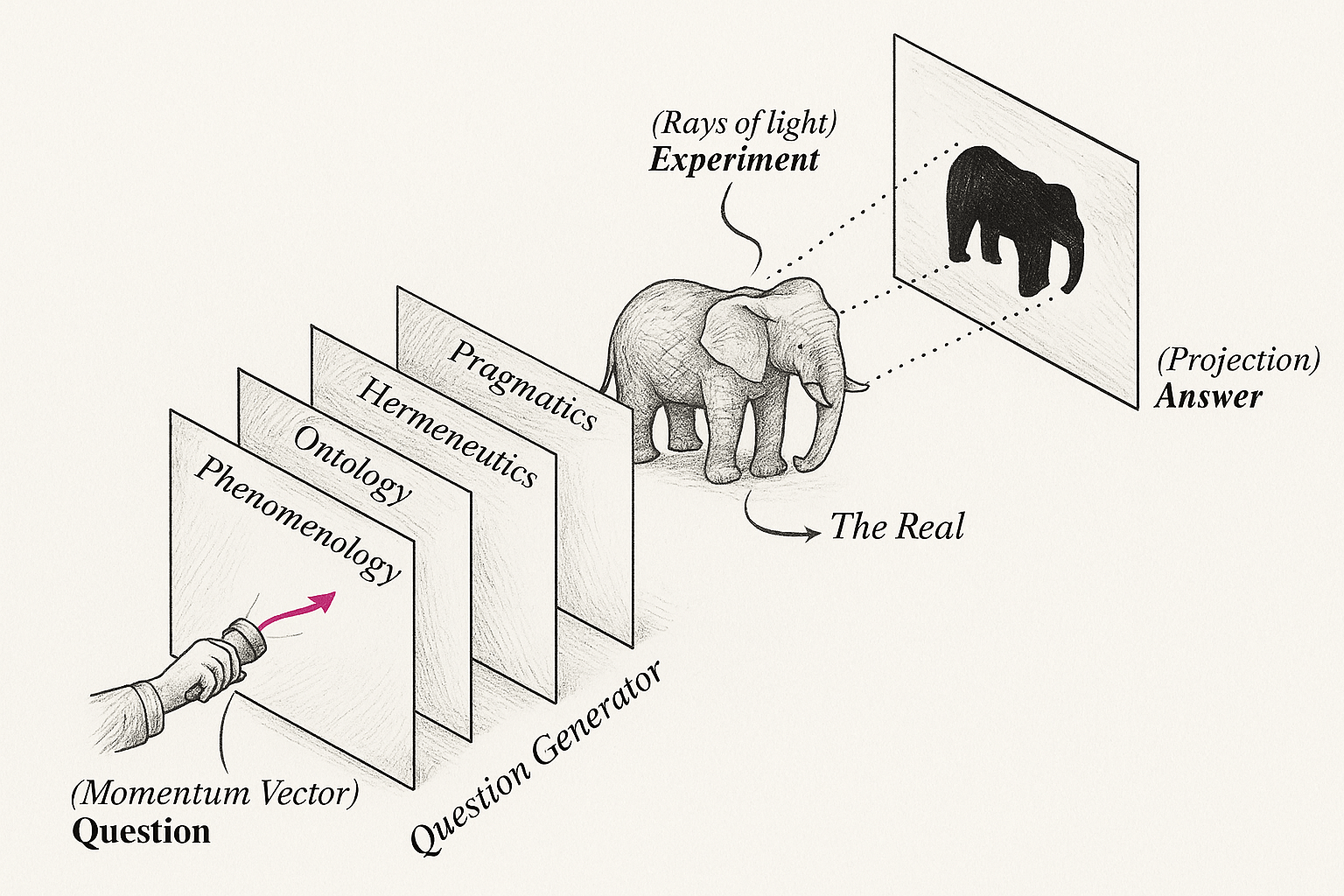
Imagine an elephant in a dark room. You don’t see the elephant. You only see shadows on the wall when a weak light hits it from different angles.
Now you try to reconstruct the elephant from shadows alone.
From one angle you see a rope: you think it’s a snake.
From another angle you see a pillar: you think it’s a tree.
From another angle you see a fan: you think it’s a leaf.
So you do what clever humans do: you build a theory that unifies snake + tree + leaf.
And maybe that theory needs 11 dimensions and 400 pages and exotic machinery — because you are literally modeling shadows of the elephant, not the elephant.
That’s what it feels like sometimes:
We’re fitting phenomenology perfectly… while missing the simplest generative rule underneath.
Why a simple rule sounds “too stupid” to be true
Now here’s the psychological part.
If you spend years learning how to compute second-loop and third-loop corrections, or how to manipulate advanced formalisms, your brain gets shaped around that workflow.
Your identity becomes:
“I am the person who can do the hard thing.”
So when someone says:
“What if the world is running on three tiny rules on a complex grid?”
It almost feels insulting. Like it threatens the whole ladder people climbed.
Even Feynman used to say something like: QED is incredibly accurate, but it doesn’t feel like the final story. (Not quoting, just the vibe.) The fact that something works doesn’t mean it’s the . Sometimes it’s just a very advanced curve-fit of reality’s surface.
And the academic system… yeah, it also selects for people who can survive those long ladders. Which is not the same as selecting for “the simplest correct idea.”
If your entire path is built on mastering complexity, then simplicity becomes invisible.
My “embarrassing” hypothesis, in plain language
Let me put the idea cleanly, without pretending it’s proven:
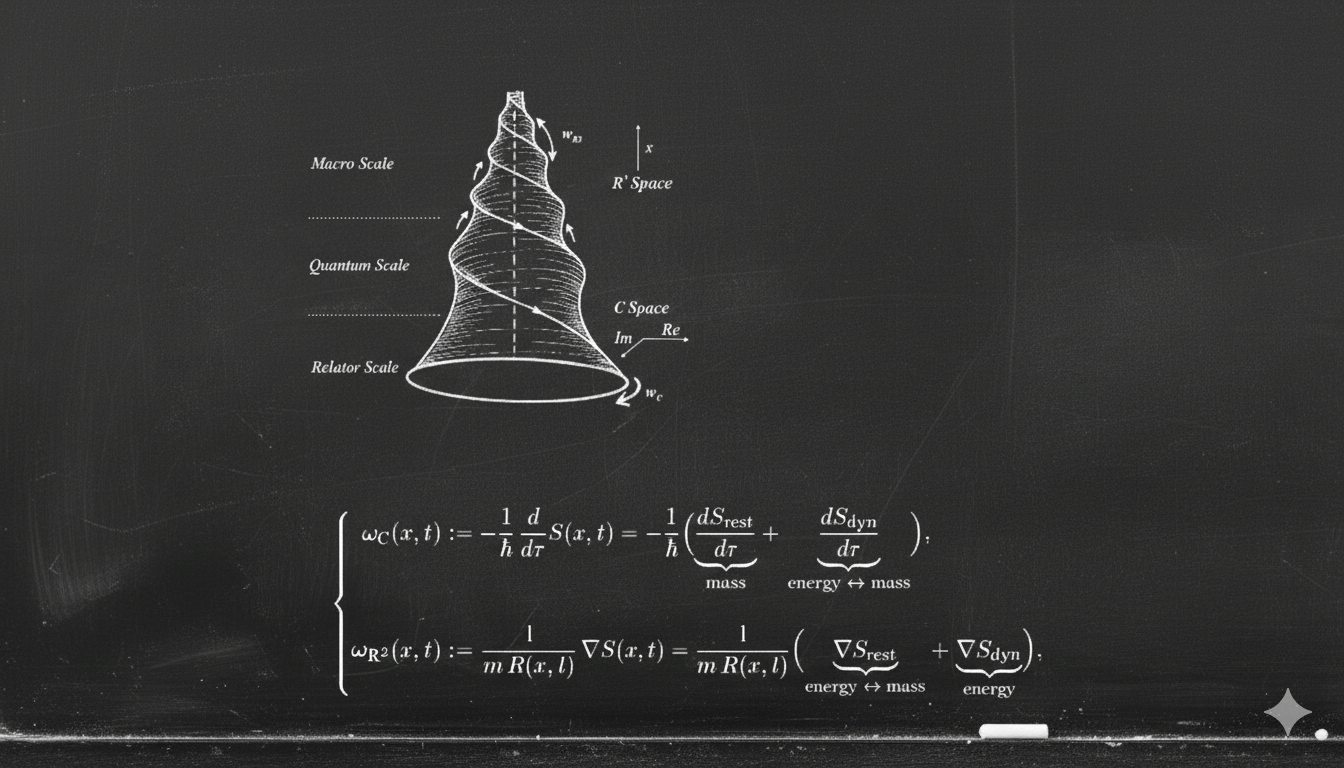
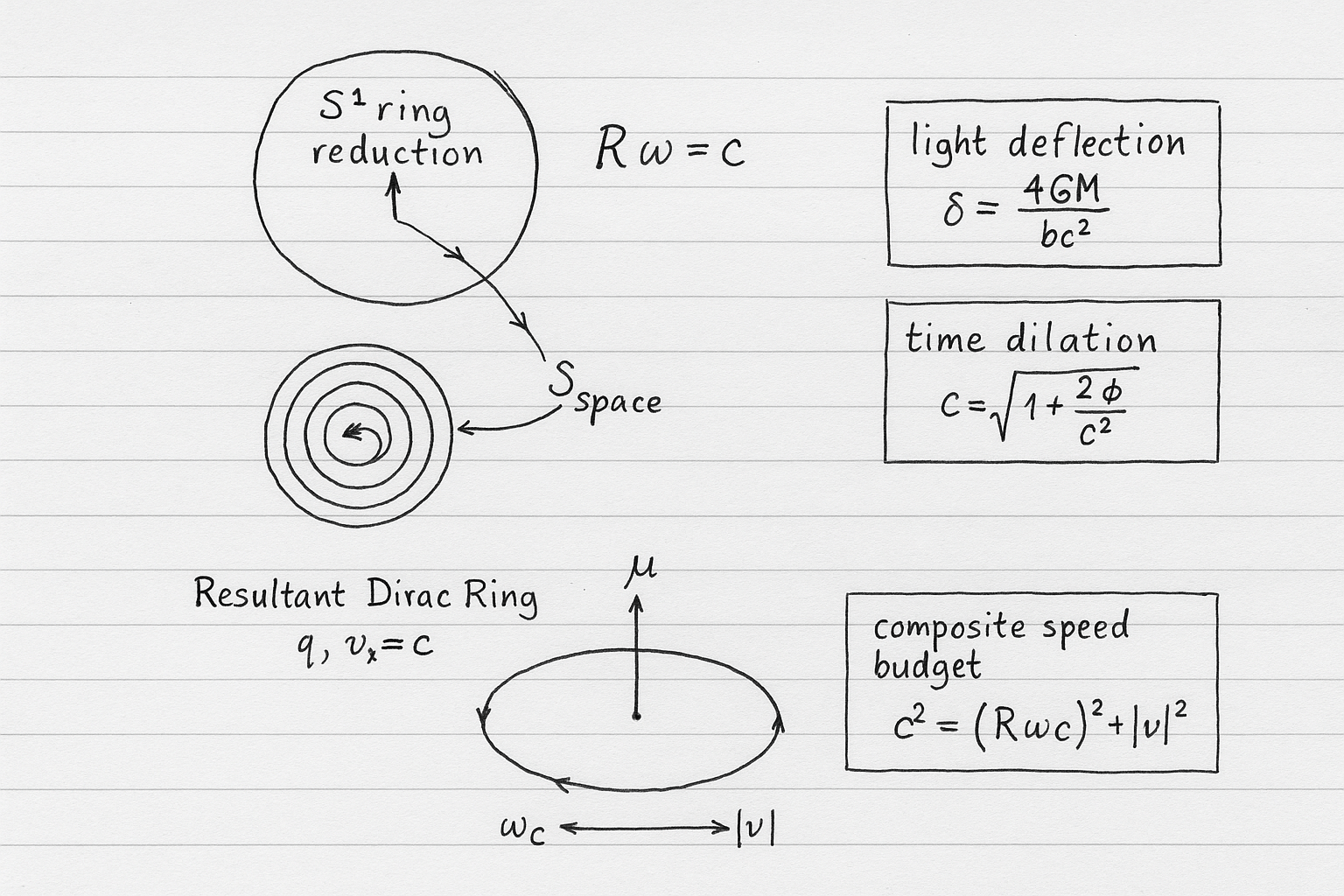
What if there exists a microscopic generator space that is basically:
one complex dimension (call it C),
discretized into cells (like boxes),
updated in epochs (ticks),
with a few local constraints (no staying, no overlap, maybe some minimal extra rule).
From this, you could get:
a notion of time (epoch count becomes “time”),
a notion of motion (change of state becomes “dynamics”),
a notion of exclusion (overlap rule becomes interaction / pressure),
a notion of entropy (counting accessible configurations),
even uncertainty-like behavior (coarse observation of a discrete microstate),
and eventually an emergent large-scale world that looks like our R3.
Not by magic — by emergence. The same way Conway’s Game of Life makes patterns that from stupid local rules.
And yes: it feels like a joke to say the universe might be built from something that looks like a grid game. That “toy” feeling is exactly why people dismiss it too early.
The real question isn’t “is it simple?”
The real question is: does it make contact with reality?
Because simplicity alone is not a virtue. Lots of simple rules generate nonsense.
To take this seriously, you have to do the hard part:
Show that known physics can emerge from it (not just vibes).
Show what it predicts that standard models don’t.
Show where it can be tested, even indirectly.
That’s the line between “cute idea” and “science.”
And ironically… , the emergence can still be brutally hard to derive. Simple rules can generate insanely complex behavior. The difficulty can move from “writing complex axioms” to “proving complex emergence.”
That trade is worth it if it’s closer to the elephant.
Why I’m willing to say this out loud
Because I’m not in academia.
And that changes everything.
I don’t need to protect a career path that depends on “this must be complicated.” I don’t need to defend a tradition because it took decades to build. I can just ask the question straight:
What if we took a wrong turn because we couldn’t find the key — and we kept adding structure to compensate?
What if the source code of reality is so small that, at first glance, it looks like a bad joke?
That would be the most human thing ever:
The truth was simple, and we rejected it because it didn’t look impressive enough.
Make Your Business Online By The Best No—Code & No—Plugin Solution In The Market.
30 Day Money-Back Guarantee
Say goodbye to your low online sales rate!